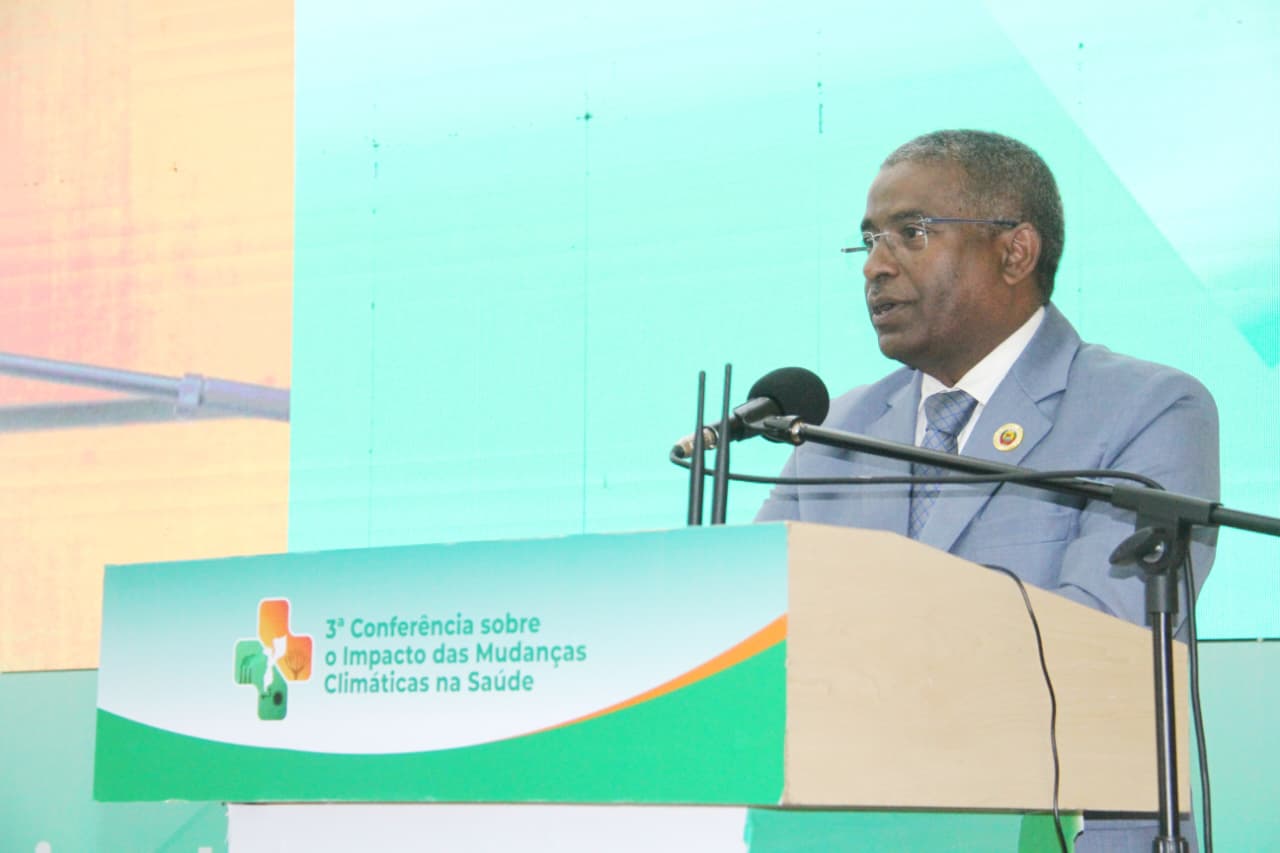
The Mozambican government predicts investing around $235 million US dollars, equivalent to more than 15 billion meticais, in adapting the health sector to climate change, with the objective of avoiding around 30 thousand deaths and more than 1.6 million years of life lost.
The investment is planned in a roadmap aimed at strengthening the resilience of the National Health System to the effects of climate change, which are increasingly frequent and intense in the country.
The data were announced today, in Maputo, by the Minister of Health, Ussene Isse, at the opening of the Third Conference on the Impact of Climate Change on Health.
"It is an unequivocal statement that Mozambique will not be a passive victim of climate change, but will build a health system that protects citizens, strengthens the economy and contributes to regional stability", stated the ruler.
On the occasion, Isse considered that climate change represents one of the greatest threats to public health today, due to the increase in the frequency and intensity of extreme weather events, namely cyclones, floods, droughts and heatwaves.
According to his explanation, these phenomena directly affect the functioning of health services and contribute to an increase in the risk of disease outbreaks, such as cholera, in addition to worsening malnutrition, mental health problems and other clinical conditions.
Mozambique is considered one of the most vulnerable countries to extreme weather events, having recorded, over recent years, cyclones, floods and other phenomena that caused loss of human lives, destruction of infrastructure and interruption of essential services.
Among the events that affected the country are cyclones Idai, Kenneth, Eloise, Freddy, Chido, Dikeledi and Gezani, as well as the floods that hit the southern region this year.
In the meantime, the minister announced an achievement for the health sector, with the recognition of the National Reference Tuberculosis Laboratory of the National Institute of Health (INS) as a member of the global network of supranational reference laboratories for this disease.
"Last Friday, October 16, the World Health Organization communicated that the National Reference Tuberculosis Laboratory of the National Institute of Health will now be part of the global tuberculosis laboratory network", declared.
According to Isse, the designation represents international recognition of the technical-scientific quality of the Mozambican laboratory in diagnosing tuberculosis and assigns the country greater responsibility in providing specialized technical support to other nations.
O governante destacou que a integração na rede constitui também um avanço para Moçambique e para o continente africano, que passa a contar com mais laboratórios de referência nesta área, na sequência do reconhecimento atribuído a Moçambique e ao Ruanda.
Acrescentou que o resultado decorre dos investimentos do Governo no reforço das capacidades nacionais de diagnóstico e contribui para consolidar o posicionamento do país nos domínios da investigação e da qualidade dos serviços de saúde.
No que respeita à resposta do sector da saúde às mudanças climáticas, Isse reiterou que a exposição a ciclones, cheias, secas e ondas de calor compromete a prestação de cuidados de saúde e agrava os riscos de epidemias, desnutrição crónica, doenças não transmissíveis, problemas de saúde mental e traumatismos.
A Terceira Conferência sobre o Impacto das Mudanças Climáticas na Saúde constitui, igualmente, uma oportunidade para a partilha de evidências científicas e experiências nacionais, com vista a orientar as políticas de adaptação do sector e a preparar a delegação moçambicana para as discussões internacionais sobre clima e saúde.
O encontro decorre de 19 a 20 de Outubro, no Centro Internacional de Conferências Joaquim Chissano, na cidade de Maputo, reunindo representantes de instituições públicas, parceiros de cooperação, organizações da sociedade civil, investigadores nacionais e internacionais e profissionais de saúde, entre outros participantes. (AIM)